
No Image

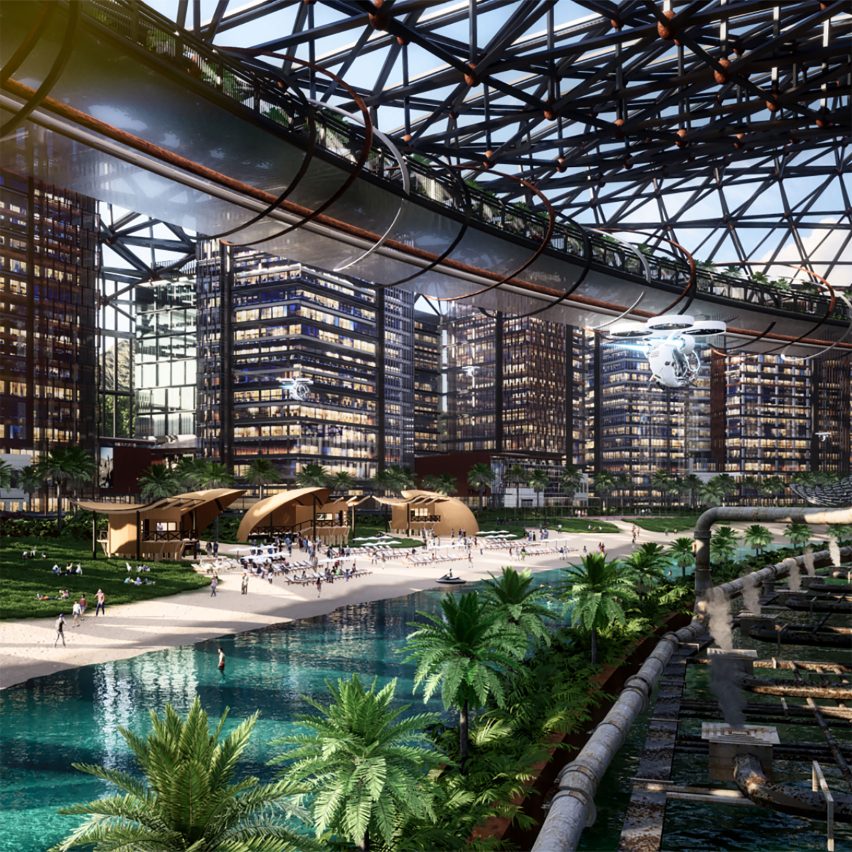
Pawel Rymsza proposes domed cities with algae lakes “to make big reductions in atmospheric carbon”
November 1, 2021 Benedict Hobson 0
Carbon Neutral Rings by Pawel Rymsza

Pawel Rymsza’s proposal to house humanity in a network of ring-shaped structures built around huge algae-rich lakes is the first of 15 visionary projects selected as finalists for Dezeen’s Redesign the World competition powered by Twinmotion. Called Carbon Neutral Rings, Rymsza’s proposal is to create a network of enclosed carbon-neutral cities for humanity to live

The post Pawel Rymsza proposes domed cities with algae lakes “to make big reductions in atmospheric carbon” appeared first on Dezeen.
No Image

Public Spaces Dinan Train Station / Fouquet Architecture Urbanisme

November 1, 2021 Andreas Luco 0

Program. The building takes part of the 2Ha public spaces in the Dinan train station area. It is a 10x30m covered hall, composed of a wooden mesh, which protects from the sun, earthen volumes, and an ETFE film which protects from rain. Four planted trees cross the structure. The project refers to the half-timbered houses and earthen constructions of Dinan. The framework plays with modernist architecture characteristics: regularity, weave, legibility of the skeleton, lightness, and with irregular spacers, an oversized transverse wooden beam, masses of earthen forms… The architecture extends the emotions of the “close to close” of houses to half-timbered, with uncertain and assured balance.

No Image

Public Spaces Dinan Train Station / Fouquet Architecture Urbanisme

November 1, 2021 Andreas Luco 0

Program. The building takes part of the 2Ha public spaces in the Dinan train station area. It is a 10x30m covered hall, composed of a wooden mesh, which protects from the sun, earthen volumes, and an ETFE film which protects from rain. Four planted trees cross the structure. The project refers to the half-timbered houses and earthen constructions of Dinan. The framework plays with modernist architecture characteristics: regularity, weave, legibility of the skeleton, lightness, and with irregular spacers, an oversized transverse wooden beam, masses of earthen forms… The architecture extends the emotions of the “close to close” of houses to half-timbered, with uncertain and assured balance.

No Image

World’s Cities Day 2021: Resilience, Climate Crisis and Sustainable Urbanization

November 1, 2021 Christele Harrouk 0

As cities grow in scale, dimensions, and amplitude, taking in 60% of the world population, the United Nations has designated the 31st of October as “World Cities Day”, an opportunity to talk furthermore about global urbanization, addressing challenges, encouraging opportunities across borders and highlighting responses. Focusing this edition on the theme of “Adapting Cities for Climate Resilience”, this day, part of Urban October, seeks to raise awareness about the climate crisis and its repercussions on the built environment.

No Image

Before & After – The Interior Remodel Of An 1880s Home In Washington D.C.

November 1, 2021 Erin 0

Architecture firm EL Studios, has recently completed the modern remodel of a three-story row house from the 1880s that’s located in the historic Dupont Circle neighborhood of Washington, D.C. Before we take a look at the remodeled interior, here’s a view of the painted brick exterior and front door. Here’s a look at the interior […]

No Image

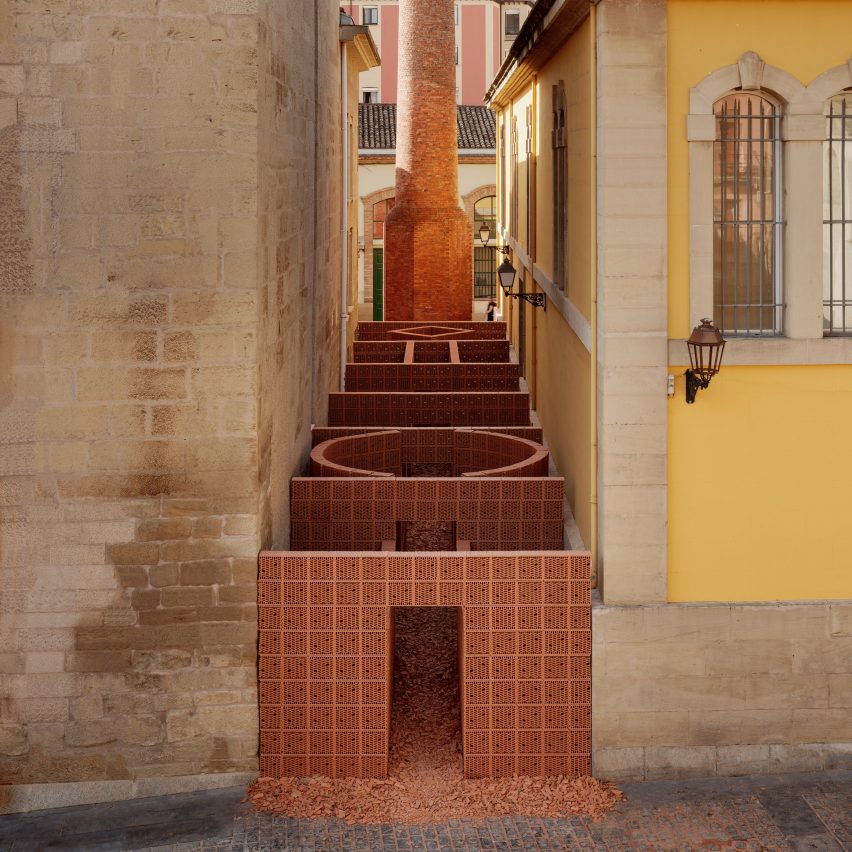
Geometric brick rooms installed in Spanish passageway

November 1, 2021 Jane Englefield 0
Types of Spaces

Architecture offices Palma and Hanghar have inserted a “playful sequence of rooms” made from thermal bricks into an empty passageway that leads to a monumental chimney in Spain. Called Types of Spaces, the project was a temporary installation commissioned as part of last month’s Concéntrico design and architecture festival in the city of Logroño in

The post Geometric brick rooms installed in Spanish passageway appeared first on Dezeen.

No Image

Domaine de Bayssan Theater / K architectures

November 1, 2021 Paula Pintos 0

Context. The deep-rooted origins of the Domaine de Bayssan still remain a mystery, but its toponymy plunges us into the Gallo-Roman period which contributed strongly to the city of Béziers identity, its economic expansion and emergence in the history.